
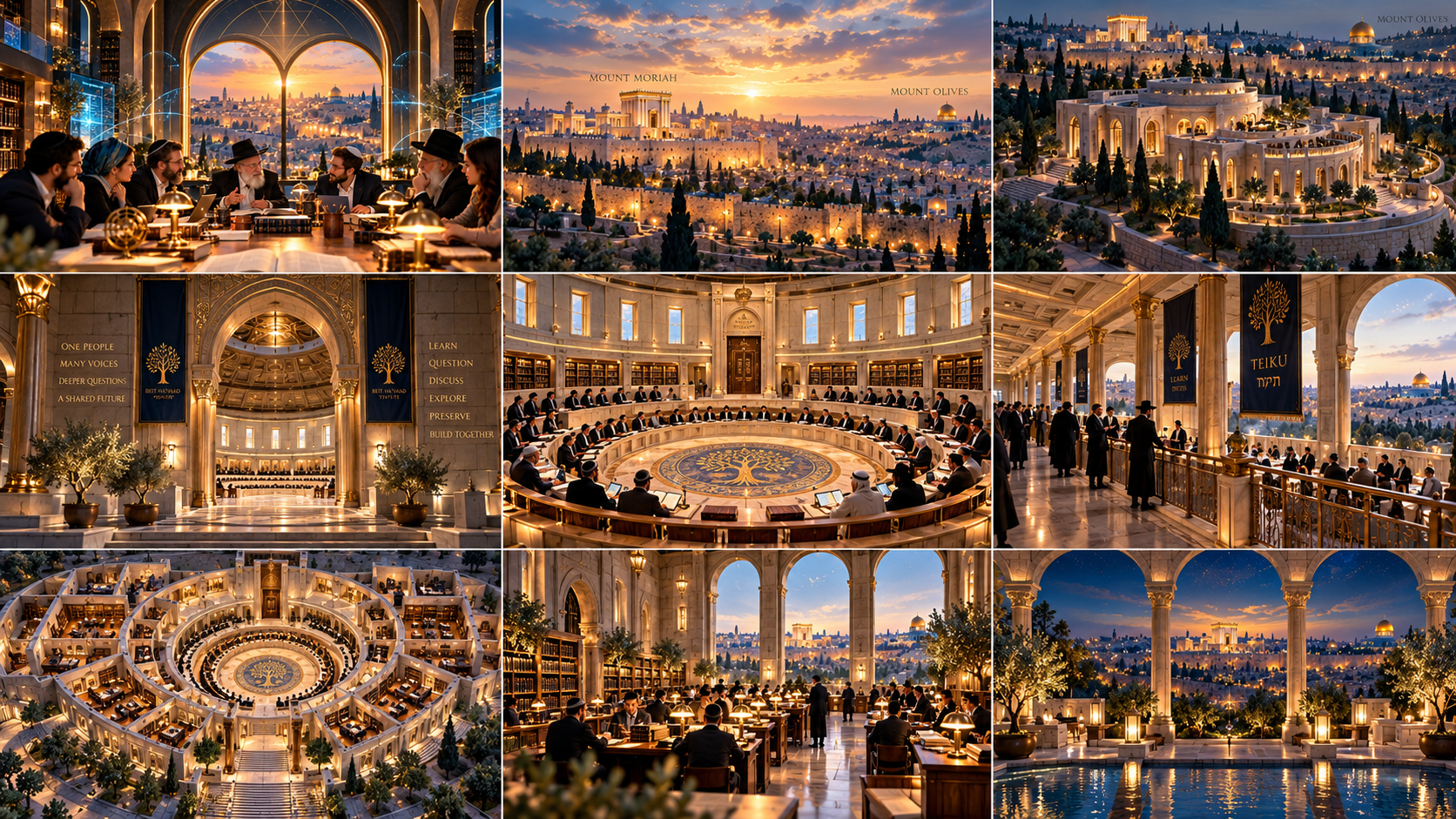
Why does the Talmud preserve a disagreement it could have resolved?
If the goal is halacha, why keep both opinions on the page? What does 'machloket' actually accomplish?
The Open Beit Midrash
בית המדרש הפתוח
A community discussion network with source-attached threads, replies, helpful votes and rebuttals. A popularity vote is never represented as a religious ruling — community helpfulness is kept separate from verified scholarly assessment.

If the goal is halacha, why keep both opinions on the page? What does 'machloket' actually accomplish?
The figure appears in different forms across sources. How do the earliest traditions describe the role, and where do later traditions diverge?
Nusach Ashkenaz, Sefardi, Edot HaMizrach and Sephardi all approach parts of the liturgy differently — where do they agree and where do they not?
Classical and modern sources overlap but don't fully agree on the footprint. What evidence supports each proposed location?